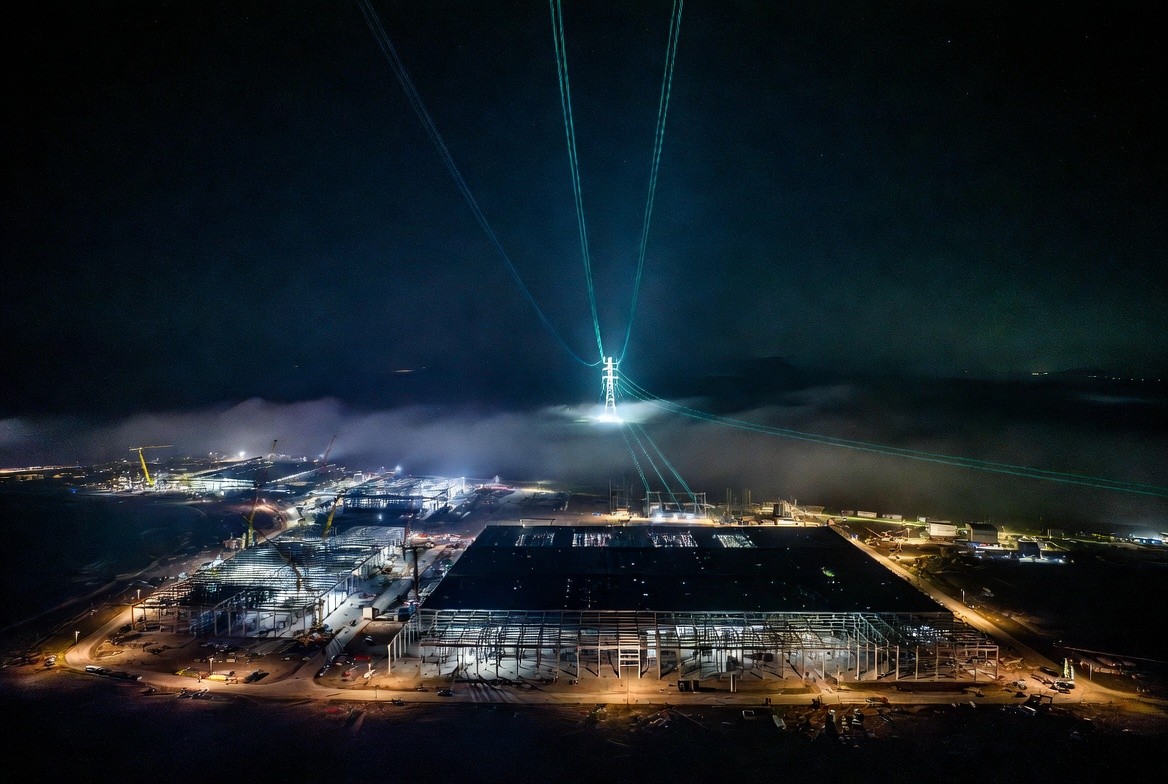
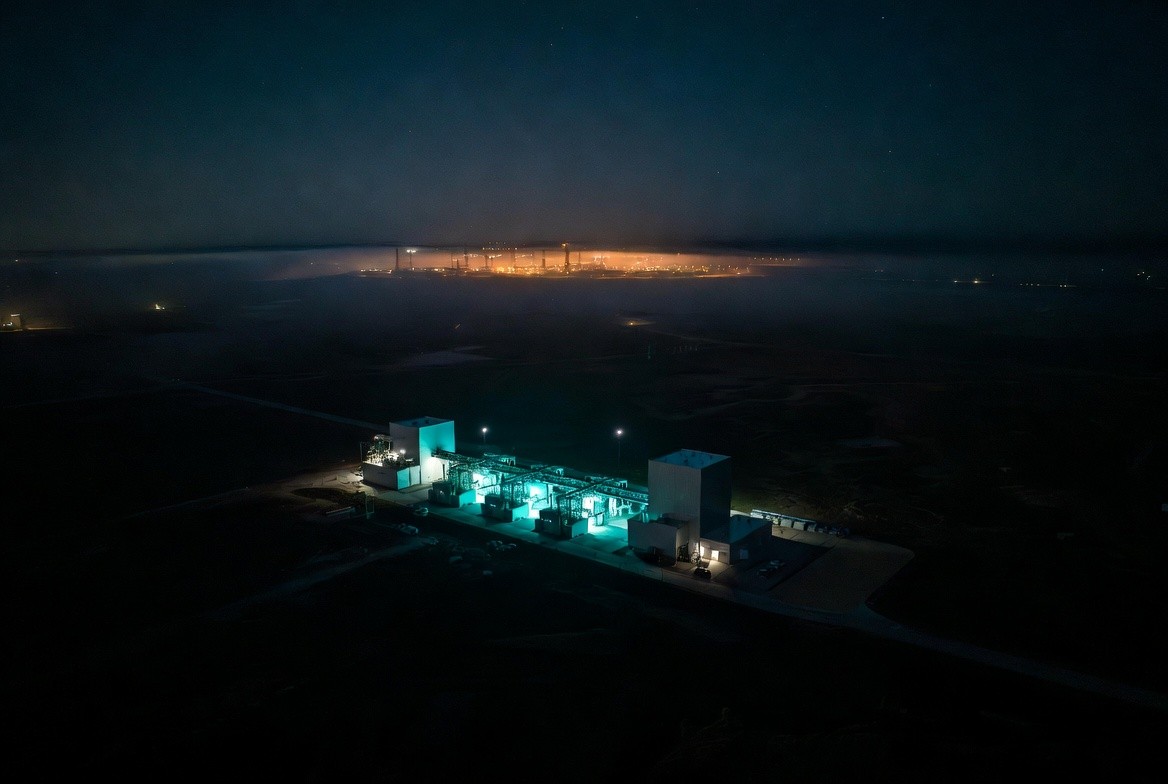
At sitepower.ai we run a daily intelligence update. This week's data-centre intelligence cycle delivered the clearest single-week signal of where this market actually is. Microsoft moved to acquire 3,200 acres in Cheyenne. CloudBurst broke ground on a 1.2 GW Texas flagship. Kevin O'Leary's "Stratos" was approved for what could become 9 GW across 41,200 Utah acres. BlackRock GIP, MGX, Microsoft and Nvidia took Aligned Data Centers private at $40 billion across 5+ GW. Meta moved its Hyperion Louisiana campus off its own books via a $27 billion joint venture with Blue Owl. Comstock and Jericho announced a 50/50 JV tied to 18,000 acres in Oklahoma with on-site gas. CPP committed roughly $741 million into CtrlS in India.
That's not a deal flow. That's a phase shift.
Todays briefing diagnosis
Today's signal summary is: "Power is the through-line across all four categories: site selection is migrating to interior US markets and 'powered land' with behind-the-meter gas, while gigawatt-scale is the new unit of ambition. Capital is now arriving via off-balance-sheet JVs and pure-play REITs, suggesting financing structure — not AI demand — is becoming the binding constraint on build pace."
That's the right diagnosis. It is also incomplete in one important way.
"Powered land" is the term the market has been waiting for
For two years, the most important thing about a data-centre site has not been its land economics. It has been whether the site has — or can credibly assemble — firm power inside the offtaker's deployment window. The industry has been describing that property in workaround vocabulary: "behind-the-meter optionality," "interconnection-bypassed capacity," "co-located generation."
This week the market named it. Powered land. Comstock and Jericho announced a 50/50 JV explicitly built on an ~18,000-acre subsurface portfolio "with on-site gas and water for gigawatt-class campuses." Microsoft's Cheyenne acquisition signals the same logic at the hyperscaler level. The interior-US migration is not about cheaper land. It is about land where the power is, or can be, on a clock that matters.
Once a market has a term, it has a unit. Once it has a unit, it has price discovery and structural deal flow around the unit. That is what happened to "data centres" as a category between 2018 and 2022; it is what is now happening to "powered land" inside the data-centre category.
Financing structure innovation does not solve the matching problem
The capital-side news this week is — by historical standards — extraordinary. A $40 billion take-private of Aligned. A $27 billion off-balance-sheet JV on a single Meta campus. A $1.75 billion pure-play DC REIT IPO from Blackstone. Morgan Stanley projecting $250–300 billion of hyperscaler+JV debt issuance in 2026. JPMorgan projecting $30–40 billion per year in DC securitisation.
This capital does an important thing. It moves multi-GW capex off hyperscaler balance sheets, where it was beginning to weigh on returns, into vehicles where it belongs. It compresses the cost of capital for the largest tier of projects. It signals to LPs and public markets that this is now a discrete, investable asset class.
It does not, by itself, change the binding constraint.
The binding constraint is the work of matching. Take any of this week's deals and trace backwards. The $40 billion Aligned consortium had to assemble across BlackRock, MGX, Microsoft, Nvidia, and the AI Infrastructure Partnership — five materially different mandates, structures, and clocks. The $27 billion Meta–Blue Owl JV had to align Meta's strategic timeline, Blue Owl's institutional risk framework, the Louisiana site's permitting envelope, and the offtake structure underneath all of it. The Comstock × Jericho JV had to assemble subsurface rights, gas infrastructure, water rights, capital, and an as-yet-unannounced offtaker profile fit for gigawatt deployment.
Each of those deals required someone, somewhere, doing the matching work — qualifying counterparties before lawyer time, structuring to a closeable shape, moving on a clock the parties could actually transact on. When that work is done well, the deals get announced in single tranches with full financial close. When it is done badly, the deals show up as press releases that quietly stop being mentioned six months later.
What the financing-structure innovation has done is make matching more expensive when it fails. A failed term sheet on a $400 million deal costs everyone a few million. A failed structuring on a $27 billion JV costs an order of magnitude more in fees, opportunity cost, and reputational drag. The capital has scaled. The matching capability that should scale with it has not.
What this week tells the three sides
If you run an energy technology company with firm-power capability — gas reciprocating, advanced storage, geothermal, advanced nuclear — the message of this week is that the addressable market just got materially larger and materially more time-sensitive. Powered land is being acquired now, in large parcels, by counterparties who need to assemble generation against those parcels inside 12-24 months. The technology side that was structurally underdistributed in 2024 is structurally undersupplied in 2026.
If you develop sites in the US, in Australasia, or in any of the emerging-market geographies that institutional capital is now actively scouting (CPP into India this week; the Nordic platform consolidations continuing), the message is that the unit of value has shifted. Sites without a credible power path are story; sites with powered-land potential — controlled subsurface, gas infrastructure, behind-the-meter optionality, or a path to firm generation inside the offtaker's window — are commodity.
If you allocate infrastructure capital, the message is that the structural innovation in the capital stack will not produce returns by itself. The new vehicles (REITs, off-balance-sheet JVs, hyperscaler-aligned consortia) compete for the same finite pool of closeable deals. The funds that deploy this vintage will be the funds whose mandate is matched to deal flow that's been pre-qualified at the front end. The funds that don't will be the funds running the post-mortem in 2028 on why the capital didn't move.
What we'd add to the briefing's summary
The briefing was right that financing structure has become the binding constraint at the deal-volume level. We'd add: at the deal-closure level — the level where capital actually deploys, sites actually generate, and offtakers actually get powered — the binding constraint is, and has been, the speed and discipline of matching. Financing innovation can put more capital at the table. It cannot make the matching happen.
That work is what we do. The application gates by audience are at sitepower.ai/apply. The matching either closes inside weeks or it doesn't.
The Qualification Gate — Financiers
For financiers ready to deploy.
If your fund has a mandate to deploy into AI-infrastructure — or the energy backbone underneath it — and you'd rather reach pre-qualified, closeable deals before the peer set does, the qualification gate is below.
We respond within five business days. The matching either closes or it doesn't — fast.
Apply to the qualification gateSitePower does not place capital, raise funds, or charge fees to allocators. Our economics come from sponsor-side carry, co-investment, and operating roles inside the deals we help shape.